Just Pour! - Water Sort Puzzle
robuminerTrivia
4.544.00 Reviews
- Version
- 2.0.20
- Installs
- 500.00K
- Age Rating
- Everyone
Screenshots
Our Review of Just Pour! - Water Sort Puzzle
 Analysis by Appyee
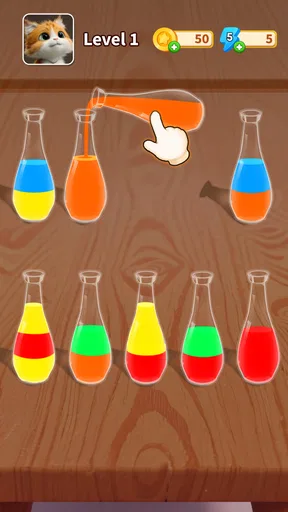
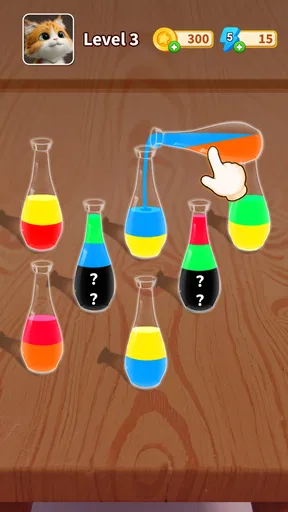
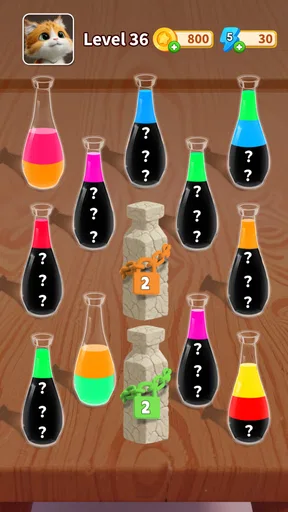
I picked up Just Pour! - Water Sort Puzzle expecting a simple way to fill a few spare minutes, and that is exactly where this trivia game works best. The first move is easy to understand: choose a bottle, pour its colored water into another bottle, and try to gather matching colors together. The challenge appears immediately because every pour changes the space you have left for later decisions.
That simplicity is the main reason I found myself starting another round. There is no complicated tutorial to learn and no large set of controls between me and the puzzle. I can open it when I have a short break, make progress with one hand, and stop when the board reaches a satisfying conclusion. The game is free to download, carries an Everyone age rating, and comes from developer robuminer.
How the pouring loop feels in actual play
I find the pouring loop most satisfying when I treat each tap as a small planning choice, not just a way to make the bottles look tidier. A useful pause is to check what a move will uncover and whether it leaves room for the next one; that keeps a quick session thoughtful without turning it into homework. When a board feels stuck, the first recovery step is to inspect the available space again.
The first action is deliberately uncomplicated
The opening decision in each puzzle is usually less about finding the perfect answer and more about creating room. I look for a bottle whose top color can move safely, then check whether the receiving bottle has the same color or enough empty space. That small pause matters. Pouring without looking ahead can trap a useful color underneath another one and leave the board awkwardly arranged.
The controls suit the concept well. I tap the bottle I want to empty and then the bottle that should receive the liquid. The visual result is immediate, so I always know whether the move worked. That direct connection between touch and action makes the game approachable for younger players, casual users, and anyone who does not want a rules-heavy puzzle.
Although the store summary describes sorting colored water into bottles, the interesting part is not the pouring animation itself. It is the limited capacity of each container. A temporary move can be helpful because it exposes a hidden color, but it can also consume the only open space that would have allowed a later combination. I quickly learned to treat empty bottles as working space rather than as spare storage.
One useful habit is to identify colors that are already close to completion before touching the more mixed bottles. If a bottle contains a visible run of one color, I try not to disturb it unless doing so opens a better route. This is a small change in approach, but it turns random tapping into a repeatable solving method.
Feedback keeps every move readable
The feedback rhythm is the strongest part of the experience. A successful pour gives me a clear visual change: the receiving bottle becomes more organized, while the source bottle reveals what was underneath. Even when the move is not part of the final solution, the board tells me what happened without requiring a separate explanation.
That rhythm creates a pleasant sequence of action, inspection, and adjustment. I pour, watch the new arrangement, and scan the remaining bottles again. The game does not demand that I remember a complicated rule set. Instead, it asks me to keep reading the current board. This makes the difficulty feel more like spatial planning than trivia in the traditional question-and-answer sense.
I also appreciate that a move can have two kinds of value. It can directly join matching colors, or it can reveal a color that was hidden below the surface. The second type is easy to overlook. When I stopped judging moves only by whether they completed a stack, I became better at setting up future pours.
There is a trade-off here. Players who want constant action may find the careful pace slow. The game is not built around quick reflexes, dramatic combat, or a stream of new information. Its feedback is quiet and methodical. For me, that makes it useful during a coffee break, but it would not replace a more energetic arcade game when I want excitement.
Why a completed bottle feels rewarding
The reward comes from visible order. A bottle that has been brought together into one color is a small but convincing sign that the plan is working. I do not need a complicated scoring explanation to understand the progress; the board looks cleaner, and the next decision becomes easier to evaluate.
That visual reward is especially effective after a risky setup. Sometimes I move a color into an empty bottle even though the move does not immediately solve anything. When that temporary arrangement later lets me combine two separated sections, the result feels earned. The game rewards patience more than speed, which is a good fit for people who enjoy logic puzzles.
There is also a useful mental reward in recognizing a mistake early. If I notice that a move has blocked an important color, I can stop treating the current arrangement as permanent and rethink the sequence. In a puzzle like this, spotting the problem is part of solving it. The board becomes a record of decisions rather than a simple chain of correct answers.
For everyday use, I found the best session length to be short and flexible. I might solve one board while waiting for an appointment, or continue through several puzzles when I have more time. Because the central task is consistent, I can return without relearning the game. The downside is that the repeated structure may become predictable for players who need frequent changes of scenery.
The reset is what invites another session
Once a puzzle is complete, the reason to continue is not a new control scheme or a different genre of challenge. It is the chance to apply what I just learned to another arrangement. The reset preserves the familiar pouring rules while changing the planning problem, so the next board feels recognizable without being identical in practice.
This is a good form of repetition for a casual puzzle. I can carry over useful principles, such as protecting empty space and checking the top layer before committing to a pour, but I still need to inspect the new layout. The reset therefore feels like a fresh test rather than a full restart of my understanding.
It also makes the game easy to fit around interruptions. If I need to put my phone away, I do not lose the basic thread of the experience. When I return, the task is still clear: examine the bottles, choose a safe action, and build toward a more organized board. That makes it more practical than puzzle games that rely on a long narrative or a complicated chain of objectives.
Still, the reset can feel too familiar after extended play. Anyone looking for story progression, character development, or a broad collection of mini-games should look elsewhere. This is a focused sorting experience, and its appeal depends on whether arranging colors remains satisfying for you after the novelty fades.
Small techniques that make difficult boards easier
My first practical tip is to count usable space before pouring. An empty bottle is valuable, but a partly filled bottle can be just as important because it may accept only a matching top color. I try to avoid filling every available gap too early. Keeping one flexible container open often gives me a way to recover from a less-than-ideal sequence.
My second tip is to separate “progress” from “movement.” A pour that moves liquid is not automatically useful. Before tapping, I ask whether it exposes a needed color, completes a same-color section, or creates space for a later combination. If it does none of those things, I usually wait and inspect another bottle.
A third technique is to work from the visible top layers while remembering what is hidden beneath them. I do not need to map the entire puzzle in my head, but I do keep track of bottles that contain a color I will probably need later. That prevents me from using a bottle as temporary storage and then forgetting that its lower layer is strategically important.
When I reach an arrangement that seems blocked, I look for the least damaging move rather than trying to force a solution immediately. Moving one top section to reveal another can be worthwhile even if it makes the surface look less tidy. The key is to preserve at least one route back into the mixed bottles.
Who will enjoy it, and who should skip it
I would recommend this game to someone who likes calm, visual logic puzzles and wants a straightforward activity for short breaks. It is also a reasonable choice for families because the rules are easy to explain: match colors, use the bottle space carefully, and avoid trapping yourself. The Everyone rating supports that broad accessibility, while the uncomplicated controls keep the learning curve gentle.
It is less suitable for players who want competitive trivia questions, factual knowledge tests, or fast reactions. Despite belonging to the trivia category, the actual experience is about sorting and planning rather than answering general-knowledge prompts. If your idea of trivia involves questions, timers, and changing subjects, this will feel like a completely different kind of game.
I would also skip it if you dislike repeated puzzle structures or if you need a strong sense of long-term progression. The attraction is the immediate board in front of you, not a large world to explore. Players who prefer word puzzles may find a crossword or word game more expressive, while players who want physics experimentation may prefer a game built around more varied interactions.
How it compares with familiar alternatives
Compared with a traditional match-three game, this feels slower and more deliberate. There is no need to search a busy grid for a quick combination. Instead, I control the order of actions and can usually explain why a move helped or hurt. That makes the experience more thoughtful, but also less stimulating when I want constant visual change.
Compared with a standard quiz app, it removes the pressure of being judged on outside knowledge. I am not rewarded for remembering facts; I am rewarded for reading the arrangement correctly. This makes it a better option when I want a mental break without feeling as if I am taking a test.
Compared with other bottle-sorting puzzles, the familiar rules are both a strength and a limitation. I understood the objective quickly, and the board state communicates progress clearly. On the other hand, anyone who has already played many games in this style may not find the basic loop surprising. The best reason to choose this particular version is its accessible, focused presentation rather than a radically different puzzle system.
What to know before installing
The game is free, which makes it easy to try without committing money at the start. It includes optional in-app purchases ranging from forty-nine cents to ninety-nine dollars and ninety-nine cents per item. I would approach those options carefully and use device purchase controls if children will be playing, because a simple puzzle can make repeated sessions feel harmless enough to encourage extra spending.
Compatibility is broad for older Android devices, with Android seven point zero or later required. The current version is two point zero point twenty, and the game has reached over five hundred thousand installs. Its average rating is four point five from eight hundred seventy-two ratings, with forty-four written reviews, which suggests that many players have found the compact sorting format appealing.
Those figures are useful context, but they do not decide whether the game suits you. The more important question is whether you enjoy planning around limited space. I would install it for a quiet, repeatable puzzle loop, not because I expect a large feature set or a deep narrative.
My verdict on the complete loop
Just Pour! - Water Sort Puzzle succeeds because its full cycle is easy to feel: I choose a bottle, receive immediate visual feedback, earn the satisfaction of a cleaner arrangement, finish the board, and begin again with a new sorting problem. Each stage supports the next without unnecessary complexity.
My main reservation is the narrowness of that cycle. The same focus that makes it convenient can make it repetitive, especially during long sessions. The game is at its best when I treat it as a compact mental reset rather than a destination for hours of uninterrupted play.
If you want a free color-sorting puzzle that is readable, calm, and easy to pick up, I think it is worth trying. Protect your empty space, look beneath the obvious move, and do not confuse activity with progress. With that mindset, the simple act of pouring becomes a surprisingly satisfying exercise in planning.
Verdict
Strengths of Just Pour! - Water Sort Puzzle
- Simple rules make it easy to start playing immediately.
- Short levels are ideal for quick breaks or casual sessions.
- Colorful liquid animations make each pour satisfying to watch.
- No fast reflexes are required, making it accessible to many players.
- Extra bottles or undo options can help recover from difficult moves.
Limitations of Just Pour! - Water Sort Puzzle
- Later puzzles can feel repetitive after extended play sessions.
- Some levels may require trial and error rather than pure logic.
- Hints and additional moves may be limited or tied to rewards.
- Ads can interrupt the flow, especially between completed levels.
- The minimalist gameplay may not appeal to players seeking more variety.
Similar Picks in This Category
View All
Millionaire 2026 Quiz & Trivia
Quiz & Trivia Games by Submarine Apps4.5

Brain Test 2: Tricky Stories
Unico Studio4.7

Trivia Crack: Brain Quiz Games
etermax4.4

QuizzLand. Quiz & Trivia game
Quiz & Trivia Games by Mno Go Apps4.8

Brain Test: Tricky Puzzles
Unico Studio4.7

Logo Quiz
bubble quiz games4.5
Frequently Asked Questions
What is Just Pour! - Water Sort Puzzle?
Just Pour! - Water Sort Puzzle is a relaxing color-sorting game in which you pour liquid between bottles until every container holds only one color. The concept is easy to understand, but later stages require careful planning, patience, and logical thinking. It is designed for short sessions, making it suitable for casual play when you want a simple puzzle without complicated controls.
How do you play Just Pour! - Water Sort Puzzle?
Each bottle contains layers of differently colored liquid, and your objective is to organize matching colors into the same containers. You can usually pour only when the destination bottle has enough space and its top color matches the liquid being moved, depending on the game rules. Before making a move, it is important to consider empty bottles and avoid blocking colors needed later.
Is Just Pour! - Water Sort Puzzle free to download and play?
Just Pour! - Water Sort Puzzle is generally offered as a free download, allowing players to try its core puzzles without paying upfront. However, the experience may include advertisements, optional purchases, or paid features such as hints, extra moves, ad removal, or other conveniences. Availability and pricing can vary by platform, country, and version, so check the store listing before downloading.
Does Just Pour! - Water Sort Puzzle work offline?
Many water-sorting puzzles can be played without a continuous internet connection, which makes them convenient for travel, waiting rooms, or areas with limited reception. Nevertheless, some functions may require internet access, including advertisements, purchases, cloud synchronization, updates, or analytics. After installation, it is worth testing the game in airplane mode because offline support can differ between releases and devices.
Is Just Pour! - Water Sort Puzzle suitable for children and casual players?
The game is generally approachable for children, teenagers, and adults because it uses simple tap-based controls and does not require fast reactions. Its main challenge is logical planning rather than complex reading or action skills. Parents should still review the app’s advertising, in-app purchase, and privacy information, especially on a shared device, since those policies may change with updates or regional settings.
Play our best games!


